Profile picture

Homepage

map marker Tennessee, USA

TennGreen Land Conservancy

Tap any photo to visit the link

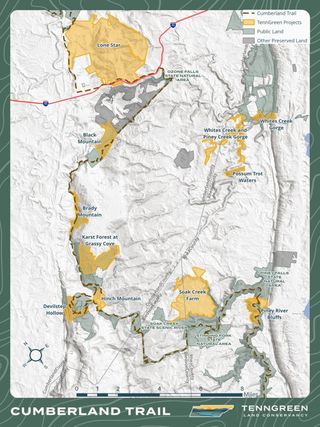
The Cumberland Trail, a long-distance hiking trail that will span more than 300 miles when complete, is a powerful example of why connected corridors matter. These corridors link unbroken habitats across the landscape, helping people, plants, and wildlife thrive while strengthening our ability to adapt to natural disasters, development pressures, and climate change.

Since 1998, TennGreen Land Conservancy and our partners have worked together to protect and expand the Cumberland Trail. The yellow areas on the map show completed TennGreen projects, including key land acquisitions and conservation easements that have contributed to this vital corridor.

Shout-out to @cumberlandtrailconservancy and the many others across Tennessee who have played a major role in @cumberlandtrailstateparks establishment and growth!

Read more about our work along the Cumberland Trail via the link in bio.
carousel
This is Lamar Cedar Glades & Woodlands, a private property in Rutherford County that has been in Jane Griffin’s family for several generations. Over the years, the land has been a homestead, a cattle farm, an equestrian farm, and now a site mostly for hiking and horseback riding.

In 2024, TennGreen helped Jane finalize a conservation easement on her land, making it the largest known privately-owned glade habitat in the area. Three species endemic to cedar glades have been found on the property: Limestone fameflower, Tennessee milkvetch, and glade cleft phlox.

On November 13, we're offering an exclusive opportunity to explore Lamar Cedar Glades & Woodlands. On this guided ~2.5-mile nature walk, you'll get to stroll beautiful lands not open to the public and learn about some of the unique species found here.

Sign up now via the link in bio.
carousel
Tennessee's natural heritage is one of the few things that truly belongs to all of us.

From the lands and waters that sustain our communities to the state parks that support local economies, conservation benefits every Tennessean.

In a new op-ed, TennGreen Executive Director Alice Hudson Pell reflects on why conservation has long been common ground in Tennessee, what's at stake as our state grows, and why bold conservation leadership matters now.

Read Alice's full op-ed via the link in bio.

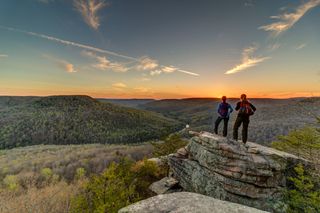
📸: Welch's Point in Scott's Gulf Wilderness State Park (Chuck Sutherland)
When a conservation easement closes, that doesn't mean our work is done! As the holder of the easement, TennGreen Land Conservancy makes a promise to serve as the land's perpetual steward. Each year, we visit every property we've protected with a conservation easement, monitoring the land to ensure the easement's terms are upheld and the character of the land and its conservation values remain intact.

While on a visit, we walk as much of the easement as accessible, keeping a close eye on boundary lines and sometimes utilizing drones for aerial monitoring of difficult areas that can't be reached on foot. We take thorough notes to document the current state of the easement, anything out of the ordinary, anything out of alignment with the easement's terms, or anything special (like a rare native plant!). We also take geo-located photos, so if there's a particular area of the property we want to keep an eye on, we'll know exactly where to go in the future and can track changes over time. Our Stewardship Manager, Kim, also communicates closely with landowners to answer any questions and provide resources to help them better care for their land.

Learn more about TennGreen conservation easements via the link in bio.
The Mayberry Hollow conservation easement protects 76 acres of lush forest, flowing streams and creeks, and critical wildlife habitat in Hickman County, Tennessee. This land is home to rare species like the coppercheek darter and plays a vital role in keeping the Duck River—one of the most biodiverse rivers in North America and a drinking water source for 250,000 people—clean and healthy.

TennGreen Land Conservancy partnered with landowner Tommy Pinkston to complete this conservation easement in 2021. The historic easement marked TennGreen's first completed Conservation Easement Assistance Fund project.

Learn more about Mayberry Hollow and TennGreen’s Conservation Easement Assistance Fund via the link in bio.
“My wife and I love our property and are in awe of its unique natural beauty. Because of this, we chose to preserve its many remarkable features with a conservation easement in hopes that the land will pass on to future generations of owners who will love and maintain it as we do." —Bill Morgan

In 2022, TennGreen helped Joy & Bill Morgan protect 32 acres of scenic private land along the Obed River with a conservation easement (pictured). This easement forever protects species-rich forests and about half a mile of frontage along the Obed, about three miles upstream of the nationally designated "Wild and Scenic" section.

Read the full conservation story via the link in bio.
carousel
Perched atop the rolling valleys of Warren County, Tennessee, Cardwell Mountain is one of the most important intact portions of the Cumberland Plateau. After years of work by partnering organizations, this layered capsule of human history was dedicated as Cardwell Mountain State Archaeological Park earlier this year, marking pivotal historic, cultural, and natural conservation for the region.

In 2021, @tenngreenlc, @theconservationfund, and @tn_nature joined together to acquire 534 acres that would become @cardwellmountainstatepark. This represented the first joint acquisition of the three nonprofits and built a framework for continued collaborative conservation efforts across Tennessee.

Read the full conservation story via the link in bio.

📸: Matt Morrison

#ArchaeologyAwarenessMonth #TennesseeStateParks #TNStateParks #Archaeology #TennesseeHistory
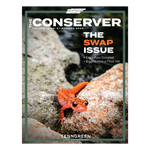
Tennessee's State Wildlife Action Plan (SWAP) is a sweeping, science-based roadmap for conserving the species and habitats that define our state.

The updated SWAP, released by @tnwildliferesourcesagency and @tn_nature, will significantly strengthen TennGreen’s Strategic Land Conservation Plan by providing updated habitat data, refined species information, and a clearer picture of where development poses the greatest threat.

That means every conservation easement, land acquisition, and landowner partnership can be focused where it will make the greatest difference.

Dive into the SWAP, and how TennGreen is putting it to work, via the link in bio. 🐟🦎
carousel
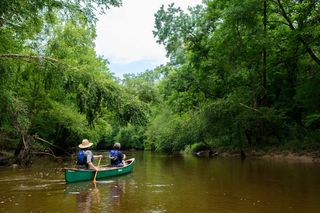
Flowing freely through the hills and bottomlands of six Tennessee counties, the Hatchie River is the last unchanneled, free-flowing tributary of the lower Mississippi River. Its 238 miles wind through dense forests, canebrakes, and swamps, supporting astonishing biodiversity.

The Hatchie is designated a Class I Natural River Area, the highest scenic river classification in the state. The river is also the only river in Tennessee with this designation applying to its entire length. Such recognition reflects the Hatchie’s exceptionally intact floodplain ecosystem, which serves as habitat for:

✓ Over 100 species of fish, including 11 species of catfish

✓ 50 species of mammals

✓ 35 species of freshwater mussels

✓ 250 species of birds, including critical habitat for migratory species

✓ Numerous reptiles, amphibians, and invertebrates, some of which are found nowhere else in Tennessee

Last year, we protected more than 1,200 acres of forest and wetlands along the Hatchie and Tuscumbia Rivers for wildlife. Read about this collaborative conservation win via the link in bio.
‌
‌
‌
‌
‌
‌
Donate Now >>
Become a TennGreen Member

Protect Your Land >>
VIDEO: What is a Conservation Easement?

Our Work
Upcoming Events
Latest News
The Conserver Newsletter—Read Online!
Hike-a-Thon 2026